Month: February 2014

Some Drinks, a Speech and Cheese Naan – The Rains of Marseille Pt 2

The Marseille airport is a bit of a misnomer.  It is the airport for Marseille in that it’s the only airport for 20 miles in any direction.  But it’s nowhere near the actual city.  The airport itself is nice, but actually getting into the city requires either taking an absurdly expensive cab (about $90), or jumping on to the $12 bus to the train station, which then takes you to the metro.  I opted for a mix of both, and took the bus to the train station, then grabbed a taxi from there.

I’m very spoiled in Marseille.  The event I’m here for, the IMGA’s, puts up all of it’s judges in an amazing four star hotel and takes care of all of our meals as well.  Essentially, our only expense is our time and for any drinks we decide to grab afterwards (hint: there’s always drinks afterwards).  Considering they also pay for my flight to and from Europe, I’m coming out well ahead in this deal.

I checked into my (huge) hotel room and found a string of emails from the other judges asking who was in town and wanted to get dinner.  Of the 17 judges arriving, most were too jet lagged to do much beyond find a sandwich or were getting in too late for dinner.  Four of us, however, decided to meet up.  Sadly, my choice of a couscous place I had been to the year before was closed (it was some kind of national holiday) but we ended up at an Irish Pub next to the hotel.

One thing I’ll never understand about Europe: in the US or the UK or Ireland, the pub is a neighborhood bar.  Prices are cheap, food is good and you expect a bit of dirt or grime somewhere.  It’s what makes the place feel like home.

In Europe proper, though, the pub is less a neighborhood bar and more a themed restaurant, like an Outback Steakhouse or an American burger place in the middle fo Warsaw (more on that later).  The pieces are all there but it’s too clean, too much memorabilia on the wall.  Everything is just slightly off.

But it was open and it served food and beer and therefore we were happy.

We grabbed a booth and some beers and ordered.  They had flamkouchen on the menu, so I had to get it – it’s a type of French/German pizza (if you want to be really specific, it’s from Alsace-Lorraine and have fun having that conversation with a French or German) that I’d had once before in Munich.  Instead of tomato sauce it uses sour cream and a super thin crust that’s cut into squares.  It’s fantastic, and this one, with duck and goat cheese, was no exception.  Eventually we called it an early night and went to bed – we had a long day ahead of us.

I won’t go into all the details as I’ve mentioned the IMGAs before, but suffice it to say that by 6pm we were exhausted.  The judges had been broken into six different groups and each group had played between 50-100 games in one day.  Our eyes hurt, our minds were mush and we were very, very hungry.

Food, however, had to wait.  One of the awards sponsors is the city of Marseille itself and they had set up an event that night with local developers who wanted to meet us judges.  I was tired, but they had free wine and food so I wasn’t going to complain.

There’s a trend here involving free food and drink if you’re paying attention.

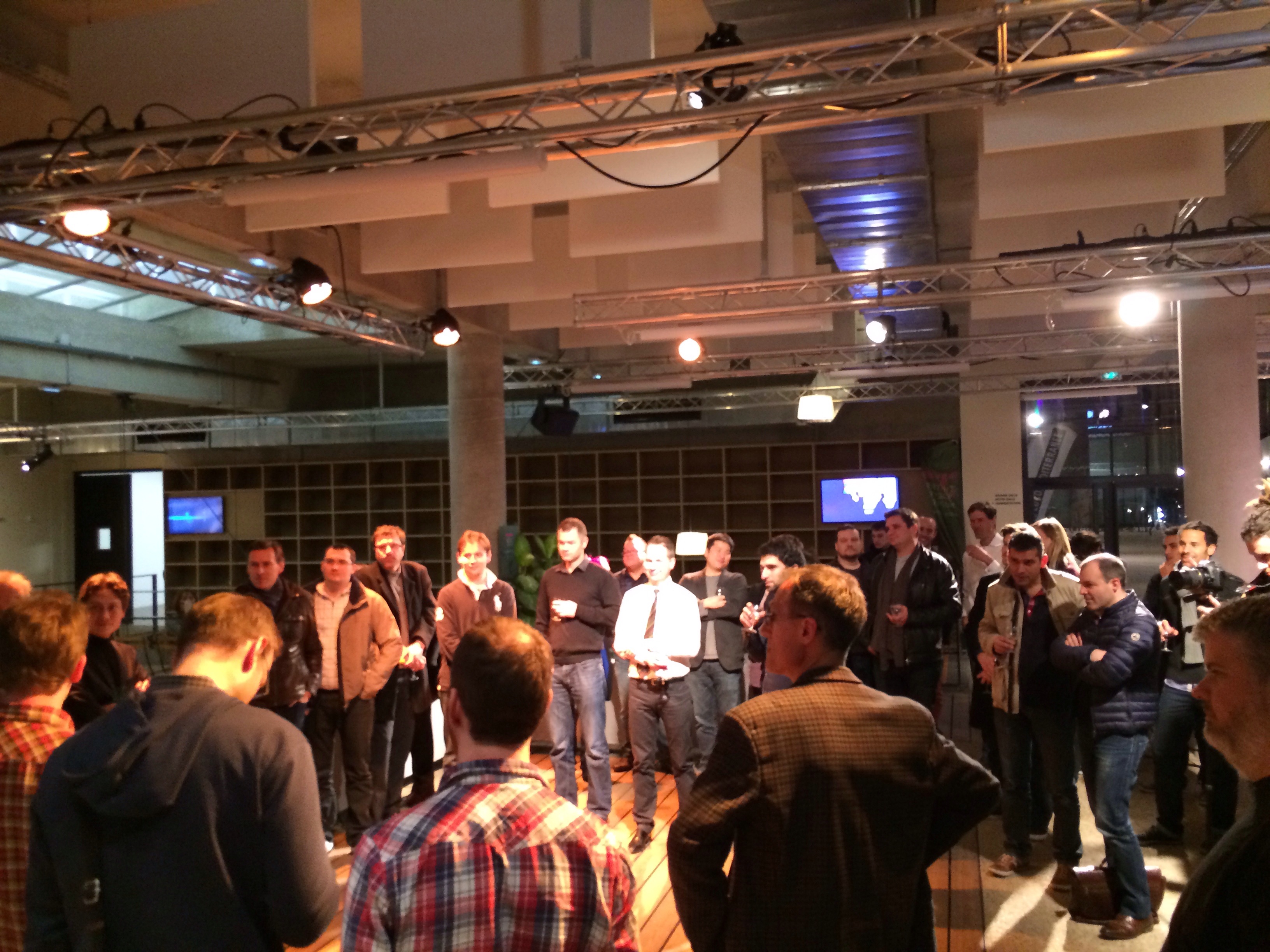
Then, about fifteen minutes before we were set to leave,  Maarten, the founder of the awards, asked me to give a short speech to the developers. Um, sure?

So about an hour and a few glasses of liquid courage later, there I was giving my first public address since I’d worked at the Capitol.  It went well and I got some very nice compliments thereafter.  But moreover it goes to show that life doesn’t move in a straight line so much as it does a spiral – you’re constantly reusing old skills for new circumstances.
 

20140225-111837.jpg

Finally, with much wine and beer in our bellies, we marched back towards the hotel and dinner.  An Indian restaurant had been suggested to us and we were not one to say no.  Everything seemed to be going fineuntil my friend Chris and I stumbled upon something we couldn’t believe.

Cheese Naan.

I love indian food.  I love naan.  And I love cheese.  Together they formed a holy trinity of possibilities.

We ordered two servings and that naan filled with goat cheese mixing with my paneer marsala was absolutely heavenly.  There simply isn’t words to describe its magical goodness.  Chris complained of stomach cramps later but Chris is kinda a wimp.  Afterwards, however, we all decided an appertif was greatly needed so we headed out towards a bar.

As I mentioned before, Marseille is really a city inside of another city and this bar existed behind the facade of the waterfront and in the old alleyways.  It was only a five minute walk from the restaurant to the bar, but it existed in a kind of no man’s land – you could tell a walk five minutes further would take you to a very different part of town, while five minutes back took us to the waterfront and our four star lodging.  We later found out someone had been shot and killed just a week before right in front of our intended choice.

We clearly listened to this advice and walked right inside: an American, a Brit, an Aussie and a German.  Just the four customers any good French bar wants.

The owner grumbled and ignored at us when we first walked in until, shockingly, my french came to the rescue.

I actually took french in school and can force my way beyond simple words and into somewhat complicated sentences such as”no, the top shelf bottle” and “yes, please do make it a double”.  At this the owner smiled and our glasses were never empty.

In retrospect, it may have been the gorgeous Australian in our midst more so than my language skills, but I digress.

After a few hours, some dancing and someone who shall remain nameless stealing a cup of the “jungle juice” at the bar (it was the Australian) for the walk back, we left for the night to get some rest for day two.

Day two is always worse than day one and this one was no exception.  By the last two hours the debates had ceased and people were barely able to get their arms up for a vote.  We had brought the list down to a respectable 130 games and I decided to allow everyone more time to play the final choices before making a decision.  I gave everyone a week deadline to get their votes into me and with that we were done.

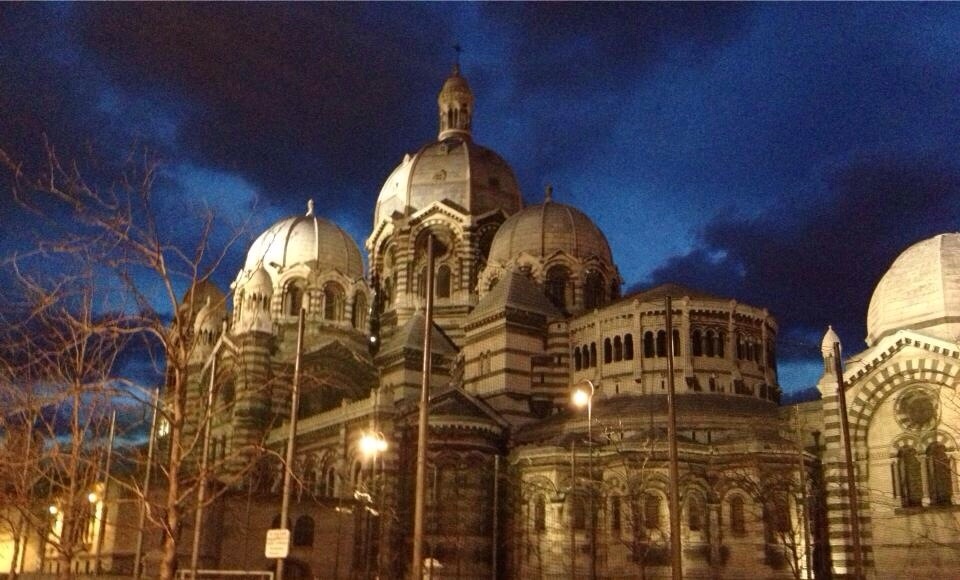
I took a group the long way back through to the hotel, by one of the old churches that had been restored and through yet more alleyways.This opened up into a view of the harbor immediately adjacent to the hotel, where the lights flickered off the water from the moored boats and the Ferris wheel.  It really is a beautiful sight.
20140225-112500.jpg

But, once again we were hungry.  Maarten had suggested a pizza place only a few doors down from the hotel so almost everyone joined.  We took up three tables and chatted amicably in English amongst ourselves while we (read: me) ordered in French. One thing led to another and ze german and I ordered a bottle of wine for the table.

French wine has a bit of a lore around it.  I’ll be honest, one of the things I love about it is the fact that, when you’re in France, you can go to any grocery store or corner market and spend $6 on a bottle and have it be one of the better bottles you’ve ever had.  That having been said, you do have to know your wine just a bit to get away with it.

In total, we paid $30 for this bottle at the restaurant, so it was probably a $15 in a store.  Other tables were complimenting us on our choice and our own table was moaning and salivating over their poured glasses.  Suffice it to say it was really, really good.

This success obviously deserved another aperitif and we found ourselves at the same bar we had been at the night before. The bartender laughed when we walked in (“one of you had some punch last night, yes?”) and he proceeded to make sure yet again our glasses were never empty.  Many exchanges of never-ending friendship took place in the next few hours.

The next morning I woke up later than I expected and wandered downstairs.  Too late for the free breakfast (did I mention they do a free breakfast here?) I asked for a suggestion for a good french bakery.  The rain was falling fast and hard outside and I borrowed an umbrella from the hotel before I headed out.  It really didn’t help matters – the rain was so heavy it was dripping through the umbrella’s fabric.

The bakery was up a hill about two blocks from the hotel, through the back alleys.  Yet no matter the pouring rain, throngs of Marseillans were wandering up the alleys looking for their favorite bakery/lunch/seafood/whatever.  They came because these were their families spot, and in talking to them it had been their family’s spot since before they were born and in some cases since before their parents were born.

This was, I realized, a side of Marseille I hadn’t seen before, the true Marseille.  And I knew that no matter which part of the city I was in, it would look like this – people rushing through the rain to pick up their favorite wine, bread and cheese.

My croissants were fantastic and I ate them while working in the hotel lobby.  A few of the judges swung by to say hello before they left but you could already see their demeanor and attitude was reverting back towards their attitudes in their home countries.  That’s the thing about traveling, you’re never really the person you are at home.

I eventually grabbed a cab with Chris as we were on the same flight, and made it to the Marseille airport.  We had the same flight to London and spent the time chatting about an upcoming conference and other projects. We made it to our flight and were off an hour later.

Marseille is a city easy to see just at face value.  But if you dig a little deeper, burrow a bit beyond the facade of the waterfront and the downtown and into the alleys behind, you can find some truly unique and incredible places, serving some of the best food and drink I’ve ever had.

I’m not sure I ever would have gone to Marseille if I hadn’t been invited ot the IMGAs.  But having been there twice before, I can honestly say I get more and more excited each year to explore it’s other side, the other city behind it all.

_____________________________________________________________________________________________________

Places:

Airport: Marseille-Provence,  http://www.marseille-airport.com/

Train Station: Gare St. Charles, http://www.raileurope.com/europe-travel-guide/france/marseille/train-station/st-charles-train-station.html

Lodging: Radisson Blu, http://www.radissonblu.com/hotel-marseille

Pub (Home of the flamkouchen): The Queen Victoria, http://www.thequeenvictoria.fr/

Indian Food (Home of the Cheese Naan): Le Kashmir Lounge, http://www.le-kashmir-lounge.com/

Pizza Place (Home of the Amazing Wine): La Galiotte, http://www.tripadvisor.com/Restaurant_Review-g187253-d1330221-Reviews-La_Galiotte-Marseille_Bouches_du_Rhone_Provence.html

Bakery: Four Des Navettes, http://www.fourdesnavettes.com/fr/


The Rains of Marseille, Pt. 1

Marseille is one of the most unique cities I’ve ever visited and you notice why the moment you leave the airport. But like most things, you have to know its history to understand it.

It’s about a twenty minute drive into Marseille and you have two options, a cab or the bus to the train station. Either way you take the same main highway down the coast.

You expect the beautiful countryside that is Provence, with its rolling green hills disappearing to the horizon. And you expect the beautiful blue of the Mediterranean as it’s waves roll lazily onto the shore.

But you don’t expect the tenements, the graffiti on every available space or the trash everywhere. As you pull into the train station you start to wonder where exactly you ended up and why you’ve come. And then you hit the center of town and are confronted with something else entirely.

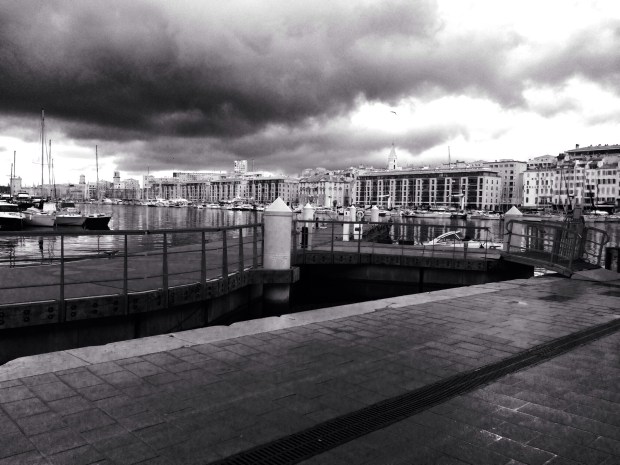
A picture perfect harbor, architecture that looks like it just came off a front cover and water so blue it hurts your eyes. Your mind whiplashes: where are you?

It doesn’t seem like it could be the same place. This is the second largest city in France, a city surrounded by poverty while in the middle of town sits one of the most beautiful scenes in Europe, with incredible food, fantastic bars and some of the freshest seafood you’ll ever find. The more you visit the less sense it makes.

Marseille has been the main area for shipping and heavy transportation in the country for hundreds of years, exporting France’s goods and importing France’s necessities. It was bombed heavily by the Germans during World War II, as was much of the south of France for it’s economic importance. It was then bombed again by the Allies for the same reasons. To say it was simply destroyed is an understatement

After the war the French government needed it’s southern coast rebuilt and needed it done fast. Germany and Italy were paying massive reparations for the war so France had money to burn. This was also the France of 1948, with a massive available workforce willing to work for very little. They did not come from France proper, however, they came from its empire. Specifically from France’s crown jewel, Algeria.

Workers were shipped in by the hundreds of thousands, with a special emphasis on Marseille. It wasn’t long before the city began to regroup from it’s utter devastation and take back a share of its former glory. But this left an interesting predicament.

Spurred on by the stories of a better life in France, millions of immigrants began flooding into Marseilles’ ports. After Algeria gained independence over 150,000 Algerians jumped on ships and moved to Marseille to try and find stability. The French government simply didn’t know how to deal with this massive influx of newcomers who had their own culture and, even more shocking, their own language.

The French language is not simply a language to the French: it IS their culture. I could spend pages upon pages writing about this (the book La Belle France does a fantastic job of explaining this is id you want more) but suffice it to say that unlike America or the Netherlands or really any other western country the French place their language on a pedestal we cannot really comprehend.

So when you have millions of new immigrants who do not speak the corner piece of your nationality, it can only lead to problems. And it has.

Across the country, the two cultures divided, with the French staying in their city centers while the new immigrant classes made homes around the outskirts. The problem continues today.

The grandsons and granddaughters of that massive immigrant influx of the 1950’s have had to live in a country completely unsure of how to integrate them. Not only do many not consider French their main language (although many can speak it fluently) their culture is different as they are predominantly Muslim.

Nowhere is this break more clear than in Marseille, as a majority of the poor are of the immigrant class. For decades this separation had only intensified as Marseilles reasserted itself as the economic powerhouse of southern France. It was an impossible dichotomy of culture and money.

It is getting better: groups like EuroMediterannee have made it their goal to bring the city back to it’s former glory, and since the mid 1990’s have begun to restore huge parts of the city. Seeing pictures of the city from just 15 years before, it’s shocking how much has changed. Every year Ianother new building has been erected, or another old building has been restored.

That restoration, however, has been focused on the city center and you see very little of it outside of there. But it helps to explain how a city can look so different from the outsides versus the in.

This is the story as it was told to me by the people I met while visiting, and it was mentioned again and again as I asked about their city. There is, then, an awareness to the problems Marseille faces even if solutions have not yet presented themselves.

It was with all of this in mind that I went to Marseille for my second time.

That Thing I Do

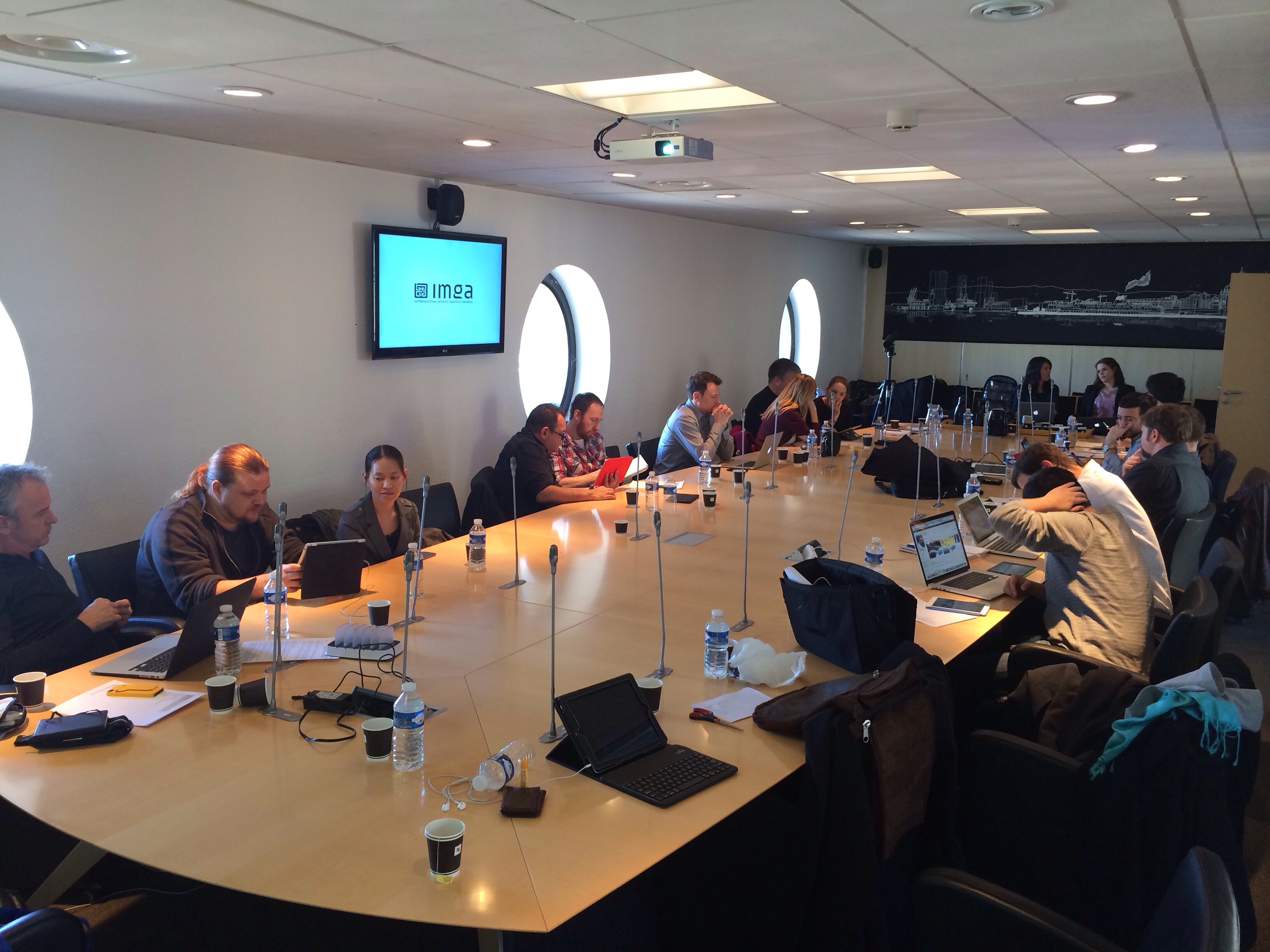
In a boardroom in Marseille, sixteen people sit hunched over iPads and Samsung tablets playing mobile games. Good natured arguments break out, and a quiet hum of conversation is broken only by an explosion or a sword slash.

20140206-135232.jpg

Lunch is served but no one stops what they’re doing. There’s simply too much to do – 600 games have to be cut down to 200 by the end of today.

This is a meeting of the best and brightest the mobile gaming industry has to offer.

This is the 10th Annual International Mobile Gaming Awards and the whole reason for my trip to Europe in the first place.

Two years ago I became involved with the IMGAs when I pitched them a panel idea. The head of the awards, got in contact asking if I would instead be willing to run their public relations outreach. I said yes and a few months later flew off to Barcelona (the first time) for the awards ceremony. It was a small event held in the heart of Mobile World Congress, but what shocked me immediately was the caliber of the attendees.

The heads of some of the biggest publishers and studios were there, as well as the editor in chiefs of every major mobile gaming site. It just felt different from any other award ceremony or show I had visited before. I knew I wanted to get more involved.

The following year I was asked to return to the IMGAs as a judge. I was ecstatic. Then, this year I was asked if I the Chairman for the entire judging process. I was speechless. It was one of the proudest moments of my life and it is an organization whose goals I care deeply for.

One of the things that differentiates the IMGAs from so many other award shows is there is no cost to enter; everything is paid for by the sponsors. In addition the prizes are real instead of just a cool plaque or trophy you can put on a bookshelf. Over the past ten years the awards have given away millions of dollars in prizes to everyone from massive game publishing studios to tiny one or two person development companies.

Which brings us to the other thing that differentiates the IMGAs so much – what kind of games end up in the nominations. In an industry run by companies who have millions of dollars in advertising budgets (ever heard of Angry Birds or Candy Crush?) the awards are one of the best ways an indie developer or small company can get the attention it needs to break through all the noise.

We’ve been called the Oscars of mobile gaming and it is not a title we take lightly.

The judging is exhaustive and is specifically designed to ensure the big games and the small sit on a level playing field. Before the judges even arrives in Marseille the IMGA team comb through the full list of submitted titles to weed out anything not published the following year or anything so filled with bugs as to make it unplayable. This year we had 1,000 games submitted: after the weeding our we had 600.

Once the judges arrive they’re thrown into the thick of it. The following 48 hours see those 600 games whittled down even further to just 60. Welcome to the big leagues, hope you brought your A-Game.

The first day is taken up with nothing but playing games: the judges are broken up into groups and given between 50-100 games to play through. Many of the games are known to the judges before they even play them, but for some this is their first chance to play through an unknown, new game.

They’re looking for specific things and if they don’t find it a game gets cut. Does a game go above and beyond in the graphics or sound categories? Did they nail an art style or make up their own that’s beautiful or striking? Is the game attempting something truly innovative in a market known for copy-cats and recycling old ideas?

Doing all of this in such a short time would be impossible without a varied jury and this year we had a great one: designers, game studio founders, journalists, marketers, publishers and even academics, all of whom have a speciality in mobile gaming.

Day one is just about getting through each groups list and by the end of it our 600 games had turned into around 160. A good first day, but it’s the second day that’s the hardest.

It starts with a brief discussion on the categories for this years awards. Some categories are set in stone, Excellence in Graphics or Gameplay for example, but others change year by year. Last year was the first year to include an Excellence in Storytelling award and this year we agreed to add Best Sound Design and Best Art Design as well.

We then go through the full list and discuss which categories each game should be entered into. From there the list is distributed to the judges and the voting begins. Once that’s out of the way the real judging starts.

Only those judges who have played a game can vote on it and it only needs a majority of votes to stay on the list. However, if a game doesn’t receive a majority of votes a judge may chose to “champion” a game and must defend that game to the judges and persuade them to give it another try. If another judge is persuaded by the argument they can second his defense and the game is saved for the time being, usually as the judge who seconded takes a chance to pick up and play the game in question.

In years past one round of voting was enough to get the list down to a manageable size. This year it took three.

Sometimes a judges favorite game won’t make the list and sometimes a game another judge thinks is truly undeserving will. The arguments can get heated.

After all the voting is finished we end up with around 20 games per category (a game can be in more than one category). Then its time for The Ballot.

The Ballot is the final voting session, but unlike everything else it’s done in secret; no one knows who voted for which game. Each judge gets ten votes per category, and can award one 10, one 9, one 8 etc to which ever ten games they believe most deserves to be in it. I collect the results, tally them and the top 10 nominees make it into the nominations.

At the end of all of this we finally have around 60 games down from over 1000.

Simple right? And that’s only the first round.

After everything is over and done with in Marseille, all of the judges head home to spend another month with each of the final games on the list. Right before the awards show we meet up to decide the winners of each category. Most of the time a few simple votes do the job, but for some of the more competitive categories (Gameplay for example) another secret ballot is cast, this time with only one vote on it.

After two months of work the judging is done and we have the years winners.

I jokingly call it all the Gauntlet and it takes a lot out of you. But the people who put their time and energy into the event know what they’re getting into. If you ask any of them about it they’ll tell you it’s the most in-depth judging for any award in the industry and I agree. And it should be.

Every day another 124 games are approved to the Apple App Store alone. Any show that tries to award the best in mobile can easily only cherry pick the ones that rose to the top, that got the most articles written about them or were the most downloaded. Forcing yourself to go in deeper, to jump into the pile upon pile of games available is exhausting, frustrating and in many ways overwhelming.

But when you do find that diamond in the ruff, a game that no one on the jury knew about that completely blows you away it makes everything worth it.

It really is the coolest thing I do.

Where ya going? Barcleona

Extra points if you get the reference.

Two years ago I was lucky enough to come to Barcelona for ten days and I struggled to describe the city. The best I had come up with was that it was like Los Angeles but an LA where everything is accessible by walking, biking, or metro. An LA where the people are nicer. And an LA where life really does move at a slower pace.

So really nothing like Los Angeles at all. So much for that analogy.

I wanted a second chance to explain it. As I was planning my trip this year I had a few things change on me last minute. Suffice it to say that I was supposed to go elsewhere from Barcelona but when that fell through I decided the universe was giving me a sign and I needed to take it. So Barcelona for 48 hours it was.

It wasn’t a hard decision but it was prompted by one thing over almost anything else: there was a meal there, something I had had two years ago I simply had to have again. Food drives most of my decisions on vacation, as you’ll find.

I booked an AirBnB room in the Borne neighborhood, right next to the Gotic (if you’ve never been to Barcelona, pretty much the center of town). I could not have asked for a better flat or nicer hosts. Paula and her boyfriend went out of their way to make sure I was taken care of, even handing me a fresh, right out of the oven slice of pizza when I walked in the door. Gee, if you insist.

Add to that the fact that the apartment was gorgeous and you understand why it’s the only place I ever want to stay in Barcelona again. Marble bathroom, floor to ceiling sliding windows in the living room and a view of the Santa Katerina market.

Why do people stay in hotels?

I kept to my regular jet lag schedule of taking a quick two hour nap (it was 3pm so it still counted as a siesta) and then headed out.

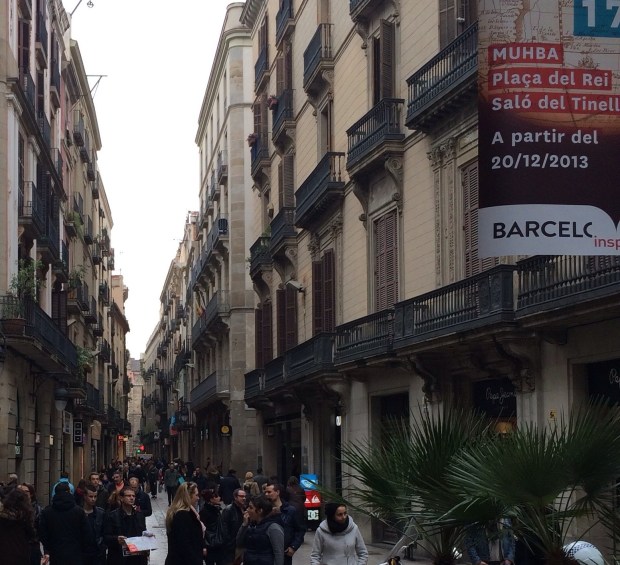
Barcelona truly is a gorgeous city and the weather was beautiful. High 50’s, sunny skies, music wafting through the Gotic quarters narrow alleys. I wandered over to La Rambla to find the street crowded as always by tourists and street vendors. I walked down the street towards the harbor and was able to catch the end of the sunset. Being in Europe again felt good.

I headed back to the apartment to shower and change. I was starving but I knew better than to try and get food – everything shuts down in Spain from about 4pm – 7pm and dinner isn’t typically until 9pm.

There was a restaurant I had been to once before that had an amazing paella in Barcolenta, another neighborhood of the city. I looked up what I thought was the name of it and headed out. Unfortunately, the place I had looked up was a different place entirely. Fortunately for me, I had ended up at one of the city’s best tapas bars.

20140203-111414.jpg

A real tapas bar is like nothing I’ve ever experienced in the US. You stand at the bar and every so often let the (server? bartender? chef? whoever they are) know what you’d like. They yell your order down the bar and two mins later it’s in front of you. Almost everyone is drinking beer, and while Spanish beer is not exactly my favorite thing in the world, when in Rome.

I have to say my Spanish was on point this trip because this time I studied. Why did I study you ask? Because last time I was in Barcelona it was just embarrassing. On my first night of that trip I walked into a ceveceria and asked the bar tender for “uno, uh….beer-o”.

That was not going to happen again,

So before coming over this time I forced myself to study all the important nouns and phrases I’d need to get around. And it worked! The entire 48 hours I was in Barcelona I never once asked if anyone spoke English, and was able to point and force my way through any interactions. Im sure I sounded like the worlds stupidest three year old Spaniard but hey I’ll take it.

Now, back to the tapas bar: my whatever-we-call-him guy knew my Spanish was awful but smiled and knew I was trying. He suggested a few things to me and I agreed to something with anchovies in it. I love fresh anchovies.

It arrived.

I can’t eat raw tomatoes – it’s a very stupid food problem I have and it gives me the worlds worst hangover for two days. I absolutely hate it.

This was an open faced tomato sandwich with fresh anchovies and pickles on it.

Travel tip #1: As Anthony Bourdain says “I don’t care if they serve you boiled puppy heads, when someone is offering you a food in their culture you eat it”.

I ate the whole thing. The hangover was a problem for future Brian.

Beyond that I had some amazing croquettes, fresh spanish olives and something way outside my comfort zone which was actually amazing, petrified tuna. It was firm but then melted in your mouth and the flavor was of a very intense, salty tuna. It was honestly great.

There was one other thing that I needed to have, however. I was in Spain and I needed some real Serrano Ham.

If you’ve never had the real stuff, in Spain, I’m not going to try and describe it’s incredible texture, it’s silky smooth flavors or it’s incredible fat content that melts in your mouth. This is one of those foods you just have to experience.

I polished off another beer then headed back to the apartment. I hadn’t slept other than my nap in 24+ hours and was running on fumes. Besides, I had big plans for the next day. I had The Meal to eat.

Which of course meant I popped into an irish pub for a night cap. I became fast friends with the british couple seated beside me at the bar and the conversation quickly moved from cities around the world we’d visited to American politics, British politics, and nationalized healthcare before finally settling on the 2nd Amendment. The conversation was jovial throughout and they even bought me a few rounds wishing me luck on my new pursuits.

Finally getting home, I accomplished the final goal I’d had since leaving San Francisco the day before. I fell into a deep, uninterrupted sleep.

Meanwhile, the next morning

Everything hurts.

The tomatoes had fully entered my system and were fighting back with a vengeance. The stomach pains mixed with the extreme dehydration only a transcontinental flight can offer had made the hours from 9am-11am (not even this was enough to keep my body from passing out and sleeping after a full day without sleep) unbearable. I was finally able to pull myself out of bed and take a shower. Nothing was keeping me from this meal.

I headed back to La Rambla and went right into the Bocqueria market. I could spend hours writing about this place – the food is incredibly fresh, the stalls are packed with people and the atmosphere is amazing. I was on a mission, however, and hung a left as soon as I walked in, heading straight for the far wall.

It didn’t take me long to find what I was looking for: on the back wall of the market sat a small tapas restaurant with blue walls and tables to match.

I had discovered this place by accident two years ago. Stuffed by eating at one of the other amazing tapas bars, I had wandered around the market and had discovered this place. The smell was enough to make me try one more thing: the fresh calamari, not fried but cut into ribbons.

It was phenomenal. I couldn’t eat anymore but I wanted it. I made a pledge to come back.

When I arrived one of the servers showed me to my seat. I asked for a water and a menu. She started telling me what was good but I interrupted her.

“I was here two years ago, there was a big platter…”

“Oh, no, that is impossible. We have a new chef, new owners. We cannot”

New owners? New chef?!?

I looked around. I was the only one there, the only one sitting at the restaurant during the lunch hour on a Saturday.

Fear gripped my heart.

I decided to take a chance and ordered just the calamari. It wasn’t at all how I remembered it.

It was even better.

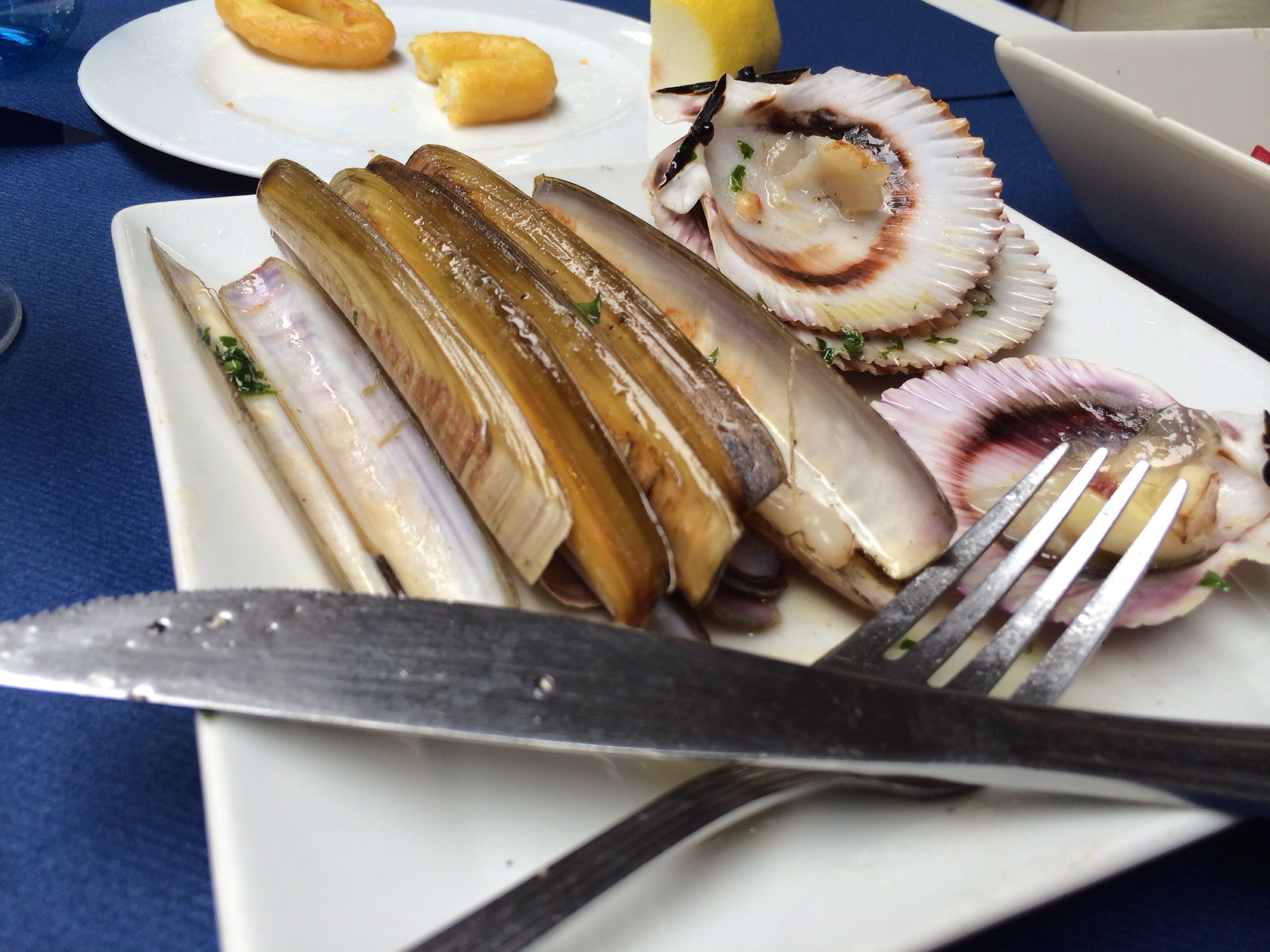
Not two minutes after the place was swarmed – every seat and wall space was taken and people were waiting in groups of 20 to try and sit down. I didn’t hurry, I had waited two years for this. Fresh clams out of the water that morning followed the calamari. Then an order of razor clams.

20140203-111236.jpg

After speaking with the servers and ordering my third water, the two older women knew something was up. Spanish women are the best – they mothered me from that moment on and kept bringing more and more free food out of the kitchen, placing each one down with a “I wonder what happened last night” or a “such a fine boy, such a dumb boy”. I loved them.

They brought me sautéed green onions in butter and garlic which settled my stomach and rose water which helped with my dehydration. There were actual rose petals in the water but I had no idea if you were supposed to eat them or not. See previous comment re: Bourdain. I ate them too.

I thanked both women immensely as I left and gave them kisses on the cheek. The meal was everything I had ever wanted it to be and so much more.

Being that I’m on vacation, however, my mind immediately went to my next meal. I knew I should try and get some paella, the other traditional food I had so far neglected in my short trip, but all I wanted was more seafood. That was when I remembered – I had access to a kitchen.

I ran through the market and grabbed anything and everything that looked good. I bought and haggled like a local: one stall vendor wouldn’t let me have less than a bundle of razor clams. After hearing the same “no it is impossible I cannot” for the third time, I pointedly stared at my watch (closing time was coming up), purposefully looked over my shoulder at the completely empty stall, pulled out a 10 euro note and said “eight please, yes?”. Wanna guess who won?

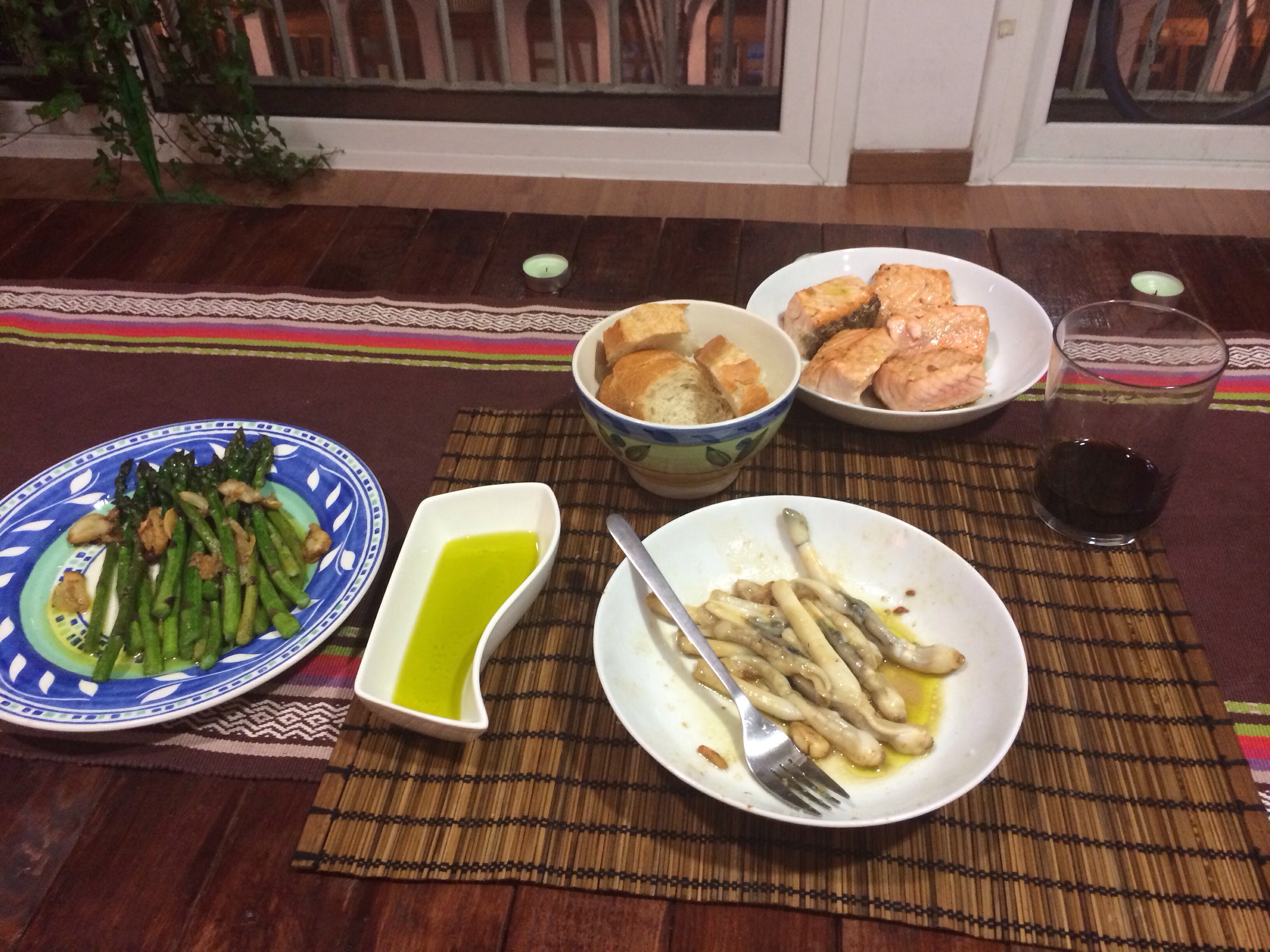
Leaving the market, I had created a mini feast for myself. Fresh bread, olive oil (pressed in front of me), garlic, asparagus, fresh caught salmon, a bottle of Rioja wine… and the razor clams. Eight of them to be exact.

Back at the apartment, I felt a siesta coming on but my hosts grabbed me before I could run into my room. Would I like to come to their bar (“you own a bar?” “of course!” “of course you do”) and listen to live flamenco music that evening? Why yes, yes I would.

They left and I started cooking my dinner. Paula had insisted that I make the apartment feel like it was my home and I was able to do just that. A band had started up in the square below and I opened the windows to let the music come through. With the music playing, my little feast spread before me and a bottle of good Spanish wine open, it was a fairly perfect moment.

20140203-111625.jpg

Barcelona isn’t a place to go and “work”It’s a place to slow down, to relax and enjoy life as it comes at you. It’s a city to escape for a bit and lounge in the sun. It’s a city I’d never want to live in; but I’m not sure that’s the point of it. It’s a place to just take a moment, take a deep breath in, and relax.

I walked the two mins to the bar. It was packed full of locals and the flamenco music hit you as soon as you walked inside. I grabbed a beer and a stool and leaned back against the wall. The music coursed through your veins forcing your feet to tap the floor below them.

Full from fresh seafood, surrounded by a room full of laughter, friends speaking fast in Catalan with chords from the guitar breaking through, this was what this city was really about.

This was Barcelona.