In a boardroom in Marseille, sixteen people sit hunched over iPads and Samsung tablets playing mobile games. Good natured arguments break out, and a quiet hum of conversation is broken only by an explosion or a sword slash.
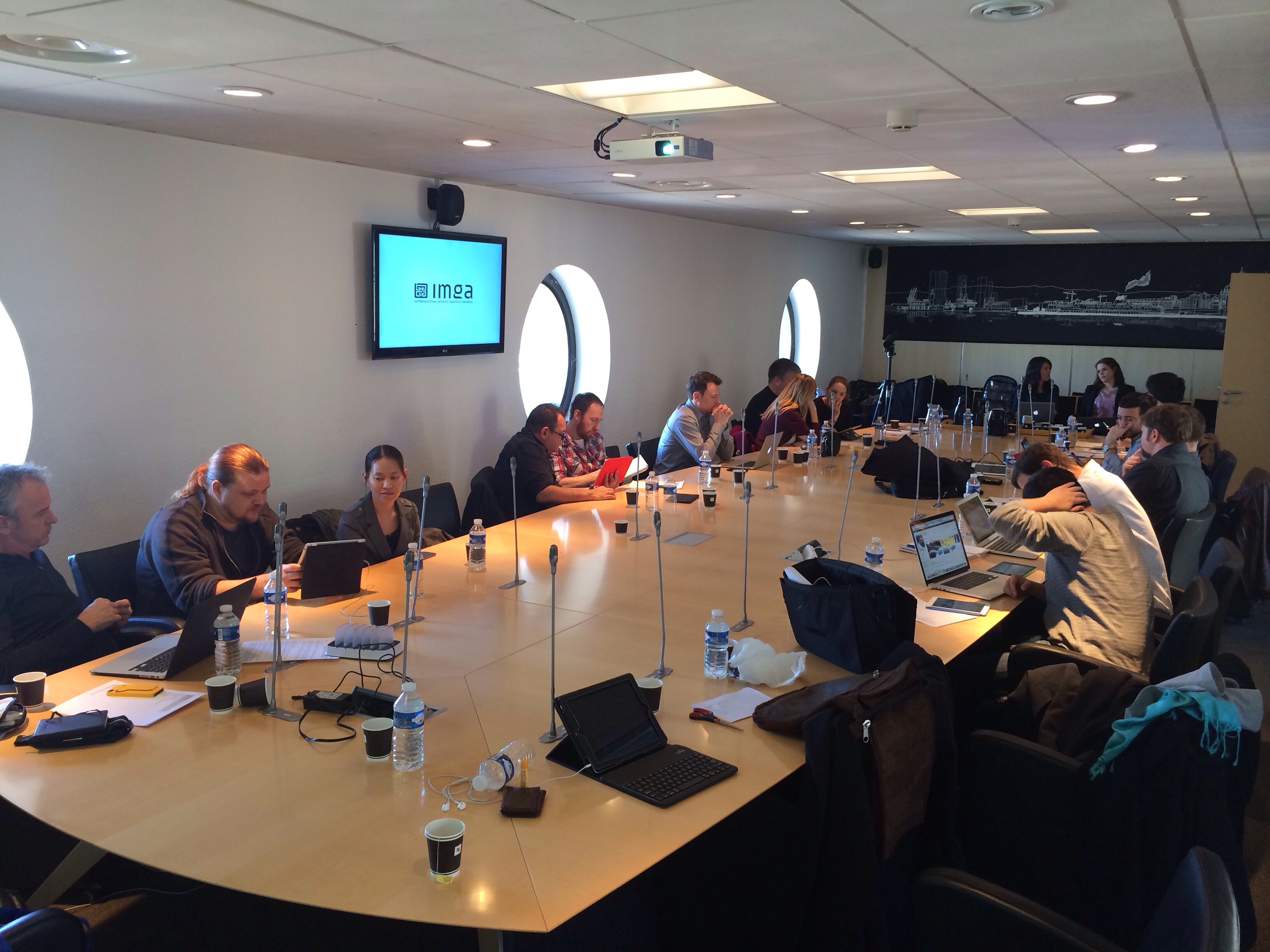
Lunch is served but no one stops what they’re doing. There’s simply too much to do – 600 games have to be cut down to 200 by the end of today.
This is a meeting of the best and brightest the mobile gaming industry has to offer.
This is the 10th Annual International Mobile Gaming Awards and the whole reason for my trip to Europe in the first place.
Two years ago I became involved with the IMGAs when I pitched them a panel idea. The head of the awards, got in contact asking if I would instead be willing to run their public relations outreach. I said yes and a few months later flew off to Barcelona (the first time) for the awards ceremony. It was a small event held in the heart of Mobile World Congress, but what shocked me immediately was the caliber of the attendees.
The heads of some of the biggest publishers and studios were there, as well as the editor in chiefs of every major mobile gaming site. It just felt different from any other award ceremony or show I had visited before. I knew I wanted to get more involved.
The following year I was asked to return to the IMGAs as a judge. I was ecstatic. Then, this year I was asked if I the Chairman for the entire judging process. I was speechless. It was one of the proudest moments of my life and it is an organization whose goals I care deeply for.
One of the things that differentiates the IMGAs from so many other award shows is there is no cost to enter; everything is paid for by the sponsors. In addition the prizes are real instead of just a cool plaque or trophy you can put on a bookshelf. Over the past ten years the awards have given away millions of dollars in prizes to everyone from massive game publishing studios to tiny one or two person development companies.
Which brings us to the other thing that differentiates the IMGAs so much – what kind of games end up in the nominations. In an industry run by companies who have millions of dollars in advertising budgets (ever heard of Angry Birds or Candy Crush?) the awards are one of the best ways an indie developer or small company can get the attention it needs to break through all the noise.
We’ve been called the Oscars of mobile gaming and it is not a title we take lightly.
The judging is exhaustive and is specifically designed to ensure the big games and the small sit on a level playing field. Before the judges even arrives in Marseille the IMGA team comb through the full list of submitted titles to weed out anything not published the following year or anything so filled with bugs as to make it unplayable. This year we had 1,000 games submitted: after the weeding our we had 600.
Once the judges arrive they’re thrown into the thick of it. The following 48 hours see those 600 games whittled down even further to just 60. Welcome to the big leagues, hope you brought your A-Game.
The first day is taken up with nothing but playing games: the judges are broken up into groups and given between 50-100 games to play through. Many of the games are known to the judges before they even play them, but for some this is their first chance to play through an unknown, new game.
They’re looking for specific things and if they don’t find it a game gets cut. Does a game go above and beyond in the graphics or sound categories? Did they nail an art style or make up their own that’s beautiful or striking? Is the game attempting something truly innovative in a market known for copy-cats and recycling old ideas?
Doing all of this in such a short time would be impossible without a varied jury and this year we had a great one: designers, game studio founders, journalists, marketers, publishers and even academics, all of whom have a speciality in mobile gaming.
Day one is just about getting through each groups list and by the end of it our 600 games had turned into around 160. A good first day, but it’s the second day that’s the hardest.
It starts with a brief discussion on the categories for this years awards. Some categories are set in stone, Excellence in Graphics or Gameplay for example, but others change year by year. Last year was the first year to include an Excellence in Storytelling award and this year we agreed to add Best Sound Design and Best Art Design as well.
We then go through the full list and discuss which categories each game should be entered into. From there the list is distributed to the judges and the voting begins. Once that’s out of the way the real judging starts.
Only those judges who have played a game can vote on it and it only needs a majority of votes to stay on the list. However, if a game doesn’t receive a majority of votes a judge may chose to “champion” a game and must defend that game to the judges and persuade them to give it another try. If another judge is persuaded by the argument they can second his defense and the game is saved for the time being, usually as the judge who seconded takes a chance to pick up and play the game in question.
In years past one round of voting was enough to get the list down to a manageable size. This year it took three.
Sometimes a judges favorite game won’t make the list and sometimes a game another judge thinks is truly undeserving will. The arguments can get heated.
After all the voting is finished we end up with around 20 games per category (a game can be in more than one category). Then its time for The Ballot.
The Ballot is the final voting session, but unlike everything else it’s done in secret; no one knows who voted for which game. Each judge gets ten votes per category, and can award one 10, one 9, one 8 etc to which ever ten games they believe most deserves to be in it. I collect the results, tally them and the top 10 nominees make it into the nominations.
At the end of all of this we finally have around 60 games down from over 1000.
Simple right? And that’s only the first round.
After everything is over and done with in Marseille, all of the judges head home to spend another month with each of the final games on the list. Right before the awards show we meet up to decide the winners of each category. Most of the time a few simple votes do the job, but for some of the more competitive categories (Gameplay for example) another secret ballot is cast, this time with only one vote on it.
After two months of work the judging is done and we have the years winners.
I jokingly call it all the Gauntlet and it takes a lot out of you. But the people who put their time and energy into the event know what they’re getting into. If you ask any of them about it they’ll tell you it’s the most in-depth judging for any award in the industry and I agree. And it should be.
Every day another 124 games are approved to the Apple App Store alone. Any show that tries to award the best in mobile can easily only cherry pick the ones that rose to the top, that got the most articles written about them or were the most downloaded. Forcing yourself to go in deeper, to jump into the pile upon pile of games available is exhausting, frustrating and in many ways overwhelming.
But when you do find that diamond in the ruff, a game that no one on the jury knew about that completely blows you away it makes everything worth it.
It really is the coolest thing I do.
 Life Of A Brian